Blogs
Training advice, inspirations, and motivations all found here.
#20: From Tension to Triumph - The Role of Calm in Horse Development
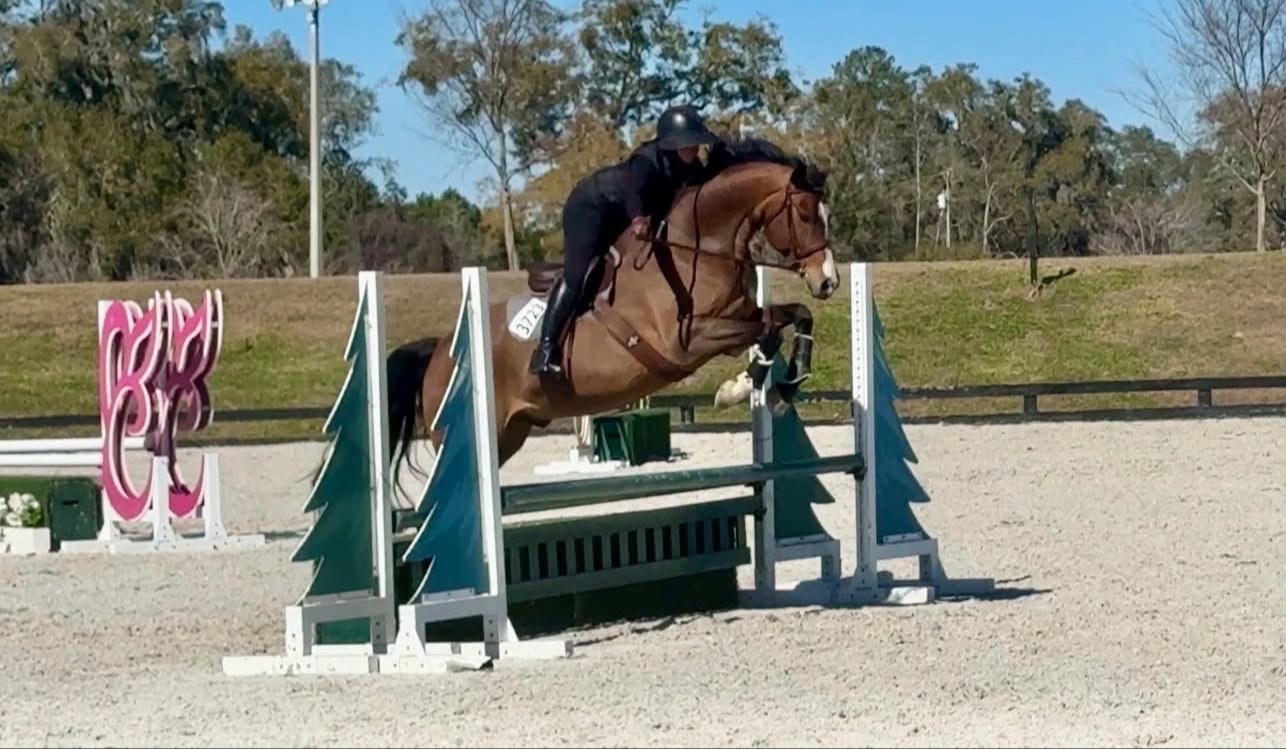
If we analyzed the data behind competition success, we would likely find that a staggering percentage of elite-level horses never reach the top because they cannot emotionally settle enough to be truly competitive.
Regardless of discipline, underlying relaxation is a necessity if a horse is to be able to maintain focus and navigate the challenges of sport. Without prioritizing this emotional foundation, we are essentially building a fancy home on a shifting sandbar.
The challenges horses face in being able to emotionally settle with humans are diverse, ranging from separation anxiety and the stress of aggressive riding to histories of trauma, illness, social learning or genetic predispositions. Whether the discipline is dressage, reining, or 1.60m jumpers, they all share a common hurdle: internal tension that limits both performance and partnership.
When a horse's nervous system is on high alert, he loses access to his true potential. In fact, it often seems that horses with the greatest physical talent can struggle the most under pressure. There is often a spark of genius in them that acts as a nemesis, creating a sensitivity that can’t seem to settle without a specialized, brain-focused approach.
We often focus on physical training because it is what we can see and measure. However, the emotional component is what actually drives that physical performance. A horse that is emotionally regulated has access to his full athletic focus. He can make micro-adjustments in a line, wait for a subtle aid, and maintain his balance through technical questions when he isn't fighting cognitive/emotional tension. By prioritizing emotional relaxation as a core part of the training program, we are giving these talented horses the ability to actually use the skills they already possess. THIS is how you maximize talent!
When a horse experiences chronic stress, his body remains locked in a physiological state dominated by cortisol and adrenaline. This constant state of high alert can cause physical tension that erodes suppleness, creates oxidative stress, a weakened immune system, and excess muscle fatigue.
In the brain, this stress effectively hijacks the nervous system, shifting activity away from the prefrontal cortex—where more complex motor skills and logical problem-solving occur—and toward the reactive, emotional centers. As a result, the horse loses his ability to process subtle aids or focus on technical tasks, becoming a reactive partner rather than a thinking one. This neurological shift means that no matter how much physical talent a horse possesses, he cannot consistently access it if his brain is preoccupied with a perceived need for safety.
So, what can we actually do about it? The solution lies in implementing simplistic problem-solving strategies that allow the horse to practice in low-pressure situations. By breaking down complex tasks into manageable puzzles on the ground, exploration of new environments and objects with choice, and helping them to recognize they are successful problem solvers, we teach the horse how to stay in a thinking state rather than a reactive one. This changes their overall perspective on training as this kind of brain engagement allows for more endorphins and dopamines to be released— thus creating new neural pathways for optimism, settling and relaxation. You would not believe how effectively this translates to under-saddle work.
These simple exercises work well because horses are excellent at generalizing. With consistency, simplistic exercises carry over well to more complex areas of training. Humans have a larger pre-frontal cortex that encompasses about one-third of the brain. Horses on the other hand, have a different, limited and under developed pre-frontal cortex.
We therefore often falsely accuse the horse of having capabilities of complex thought that are more simplistic. This is where giving them agency, learning problem solving skills, and fostering curiosity to think for themselves pays large dividends. Utilizing this sort of training protocol, we can help develop and strengthen neural pathways within the prefrontal cortex, leading to improved cognitive function.
We then implement that same style of cognitive learning under saddle (once they have mastered the basics on the ground), ensuring the horse has a clear path to process information even when the environment becomes challenging. This moves us away from a model of pressure and release and toward a model of chosen engagement, producing a horse that can sustain a long, successful career without being eroded by chronic stress.
If you are ready to see how focusing on the emotional component of training can transform your results in the show ring, come explore what we are building at Shawna Karrasch Equine. We have a dedicated community of professionals and students who are working to change the way we approach performance, and we would love to see you there. Our interactive labs are designed to give you the practical steps needed to turn a talented, sensitive horse into a confident competitor.