Blogs
Training advice, inspirations, and motivations all found here.
#21: Creating Confident Horses Through Emotional Development
When your horse was young, his brain was highly plastic, meaning every interaction he had with his surroundings or with humans creates a lasting blueprint for his future temperament. Foals/young horses are not yet capable of complex problem-solving as the development of these skills takes time- so it’s imperative we create for them a timeline that sets them up for success in his young life.
As he transitions into the yearling and two-year-old years, his mental capacity expands to include a greater sense of independence. This phase is an ideal time to leverage neural plasticity by introducing small, manageable problem-solving tasks. When a young horse is asked to figure out simple puzzles on the ground, his brain forms new neural pathways that favor thinking responses over a reactive ones.
These successful wins build a sense of agency, making him more adept and confident when faced with the unknown. However, it is vital during these middle years that he is not rushed into tasks that take a significant emotional toll. Pushing a horse too soon often creates a mental overload that triggers the amygdala, the brain's center for fear and survival. When the amygdala is overstimulated by pressure or rushing, it effectively hijacks the horse’s ability to use his prefrontal cortex, which is responsible for higher-level learning and reasoning.
If a horse is forced into a high-stress situation before he has developed the emotional regulation to handle it, he doesn't learn the task; he learns to survive the moment. His brain in those moments is not capable of distinguishing what is life-threatening and what isn’t. We as handlers and trainers need to therefore have empathy and understanding that our horses are not trying to be “bratty” or “stubborn”. They are legitimately incapable of processing the way humans often perceive.
Without this thoughtful upbringing, the result are horses who are emotionally stunted and we risk creating dysregulation and reactivity. Unfortunately these horses are extremely common. The other side of the over-reactive horse is the horse who is shut down. You have seen them… they are those horses whose eyes look vacant and seem unwilling to show you any parts of their personalities. They may look “obedient and compliant”, however their systems have also been hijacked the same as the reactive horse. They are just expressing it in a different way. In fact, these are horses who have learned that to avoid trouble, they must not use their voices at all.
This can be incredibly detrimental because those early fear memories are deeply ingrained and difficult to overwrite later in life. Anyone disputing this can simply look at the humans around them who are still struggling to resolve their own childhood issues. A horse that is rushed, often develops a thin foundation where he appears to be performing, but is actually in a state of tonic immobility or hyper-vigilance. This can take a toll and can lead to emotional fatigue, unpredictability, or a complete shutdown of willingness.
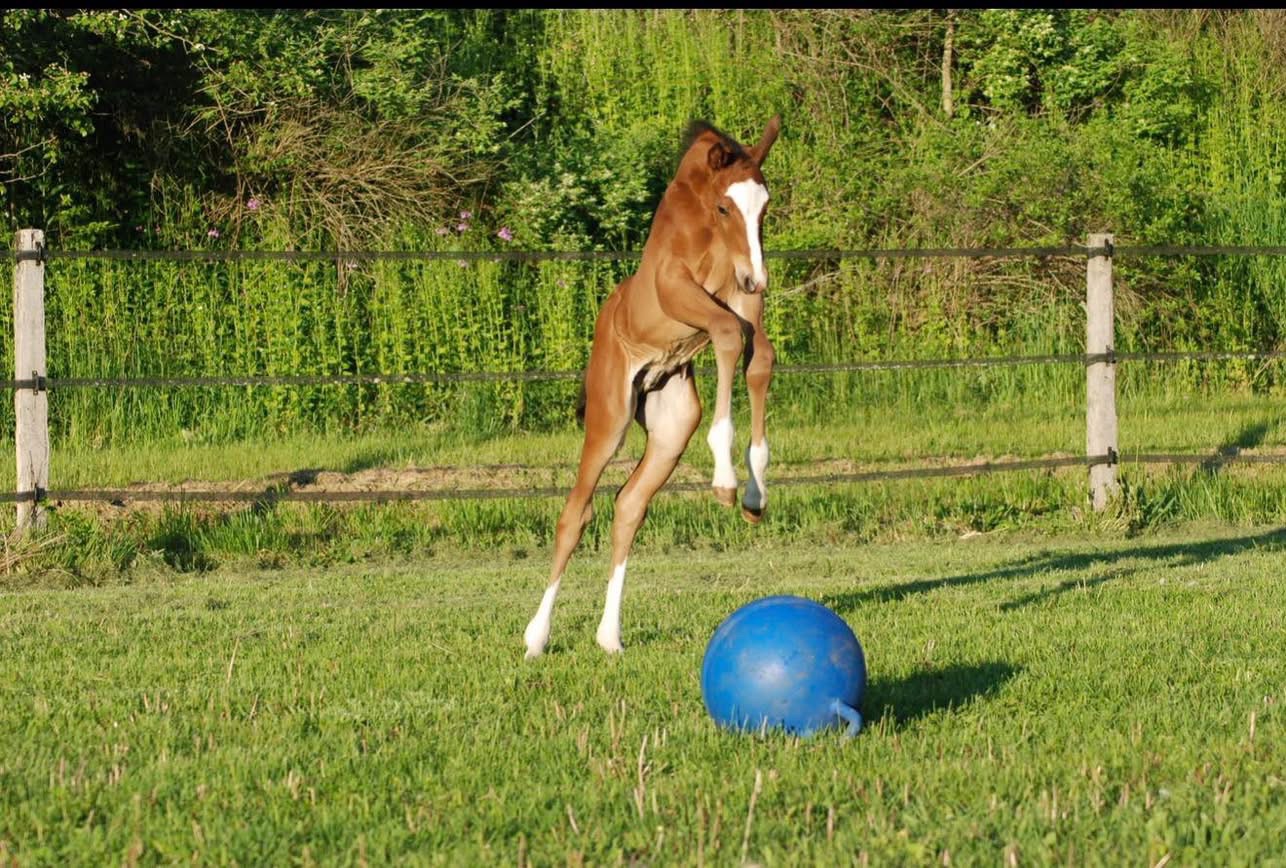
At ages three and four, he is still a work in progress. While some might consider this an age to begin formal work, his mental focus and emotional resilience are often not yet robust enough to handle high demands. It is important to work with young horses throughout all these early phases of life, but in a way that fosters curiosity and avoids forcing horses over threshold. Continuing to prioritize thoughtful cognitive challenges allows his brain to mature to it’s best ability without the stress and strain that can lead to mental repercussions.
Waiting until he is mentally prepared ensures that his foundation is built on a solid understanding of how to process information rather than just learning how to keep himself out of trouble. Taking the time to wait, allows a pace he can handle, resulting in becoming reliable and willing. A horse who is thriving looks like a willing, engaged, and curious partner who possesses a strong sense of trust in humans. Since we can’t pull apart the physical from the emotional states, we must focus on the entire picture when raising and training young horses.
Bottom line. We cannot take it personally. All behavior serves a purpose and is a form of communication. It is our job to recognize the glimpses our horses show us into their neurological states and emotional systems. Paying attention and getting these elements right will result in a horse who enjoys interacting with humans and is engaged and willing. The good news is, even if your horse has a long history of trauma, we can go back and rewrite their neural pathways when done thoughtfully and systematically.