Blogs
Training advice, inspirations, and motivations all found here.
#28: The Thinking Brain vs. The Reactive Brain
When we look at how consent and assent function in positive reinforcement training, it really comes down to the scale of the animal's choices and how closely we are paying attention. Consent is the big-picture agreement where a horse actively chooses to show up and participate in the first place.
You see consent when a horse voluntarily leaves the herd, walks up to the gate, or hangs out with you at liberty without any ropes or fences forcing them to stay. This shows their baseline comfort level before you ever even ask for a specific behavior.
Assent, on the other hand, is the nuanced, moment-to-moment conversation happening within a session. This is where the horse gives permission for a next step, often communicated through their facial expressions or body language.
For example, a horse might give you overall consent to liberty lead, but they might withdraw their assent for a specific piece of this behavior chain by showing an obvious sign (such as walking away). More often than not through, it's displayed as a micro-signal of tension, like a subtle eye wrinkle, a tightening around the muzzle, a slight hesitation, or various other signs of avoidance.
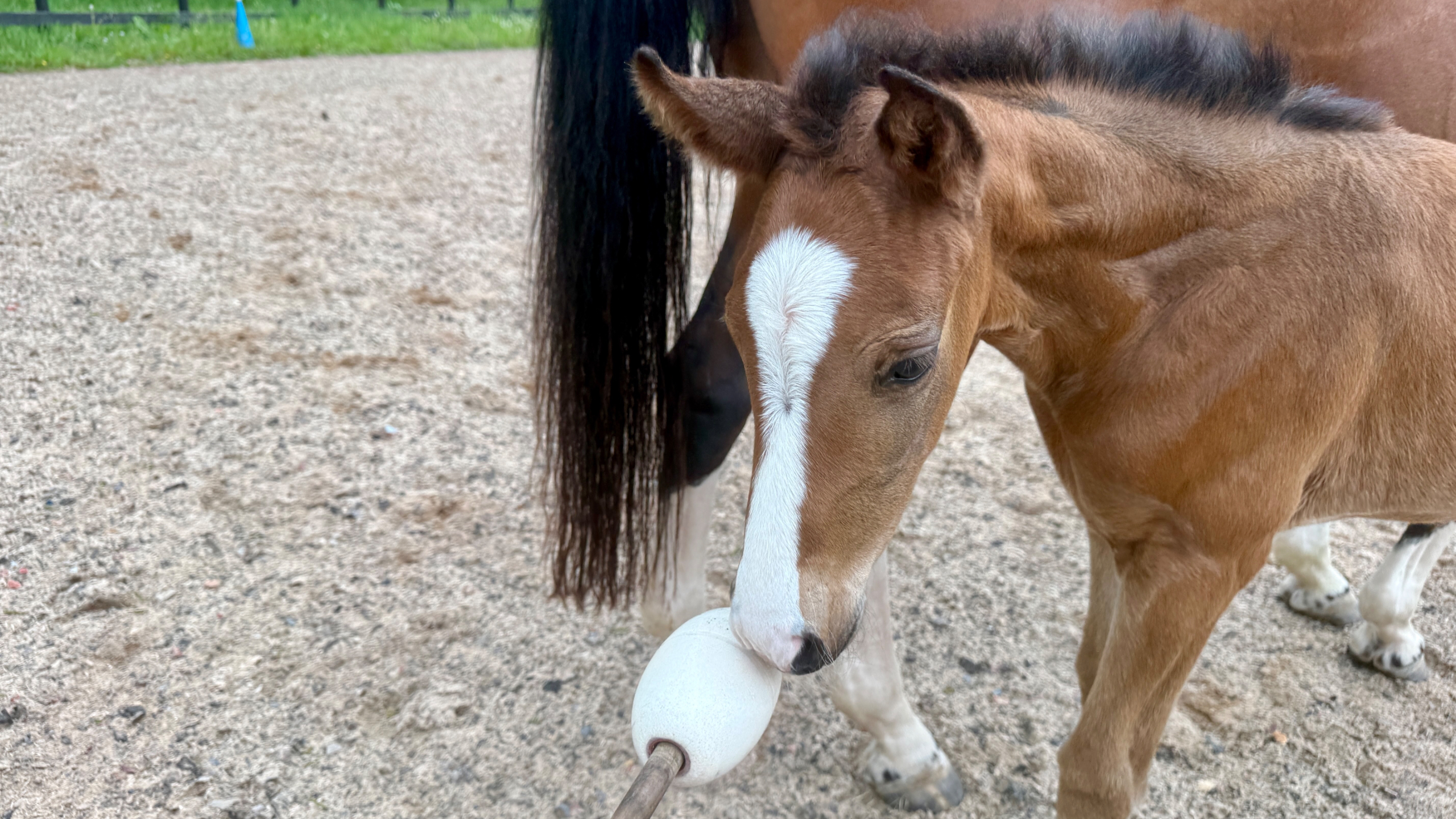
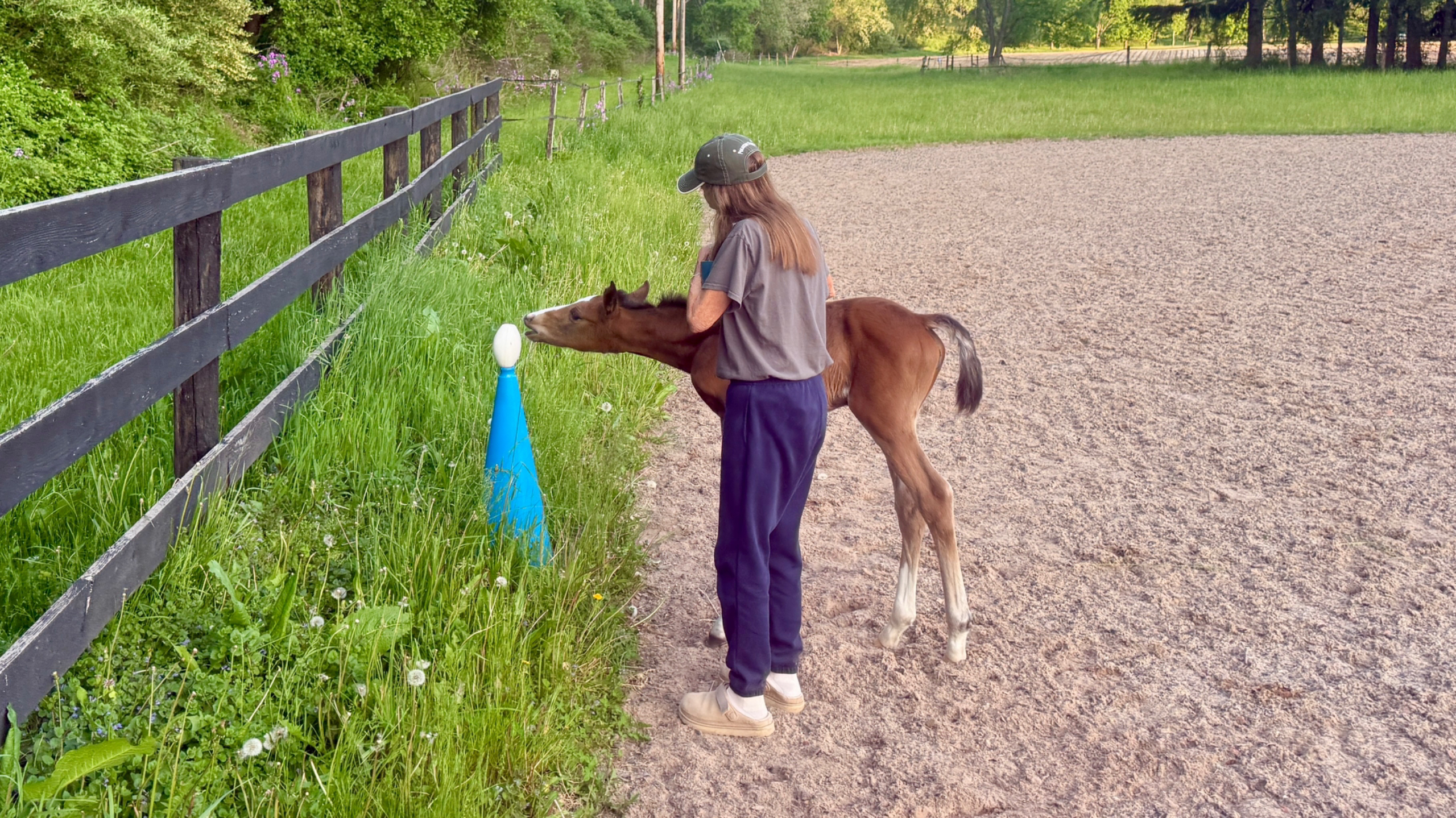
Properly applied positive reinforcement training relies on honoring that subtle shift when assent is lost. When horses show a moment of hesitation or physical tension, they are most likely communicating that the criteria might be a bit too high, a distraction too intense, or something feels physically uncomfortable.
Instead of pushing through, a trainer can read that loss of assent as valuable data, allowing them to adjust the setup, lower the criteria, and keep the horse in a confident, relaxed state. The dialogue between horse and human should remain fluid at all times.
The traditional concept of a start button is often introduced as a distinct, mechanical behavior—like a horse touching a target or assuming a certain posture—to signal they are ready for the next step. While this is a well-intentioned way to offer a horse a voice, relying on a formal "yes or no" switch can accidentally oversimplify the rich, continuous stream of information the horse is constantly providing.
While formal start buttons have gained significant popularity in the positive reinforcement community (and they do have a specific place for the less advanced R+ trainer) we tend to take an approach that intentionally favors a deeper, more reciprocal conversation once we have developed the skill to do so.
We rely instead on being keen, continuous observers of the horse's entire physical and emotional state throughout every moment of the session. A horse shouldn't need to touch a target to communicate when the trainer is already attuned to the micro-signals of tension and relaxation happening in real time.
True progress relies on our ability to see and honor open communication, especially with horses who are initially shut down. As we approach more sensitive behaviors, we must look for subtle apprehension, never moving forward until the current stage is completely solid and fluid.
While a formal start button can serve as a helpful stopgap, it often introduces a transactional layer that we hope our R+ students can move past once they become fluent at cultivating a subtle, constant, and living dialogue.
Furthermore, introducing a formal start button frequently creates an unintended behavioral byproduct: mindless pushing. Because horses are highly efficient learners, they can quickly realize that mechanically repeating the "button" behavior will simply get them reinforced. Of course this should not happen with the more advanced trainer, but then the more advanced trainer will hopefully be astute enough not to need them!
When not used carefully, the start button can mask genuine emotional states, causing a highly aroused or anxious horse to offer the behavior automatically while drowning out the nuance of the cue. By focusing on a natural flow of communication based on relaxation and mutual awareness, the session can remain a true conversation rather than a transactional series. '
< Previous Next >