Blogs
Training advice, inspirations, and motivations all found here.
#28: The Thinking Brain vs. The Reactive Brain
People often imagine that listening to horses is a world without boundaries/structure and is setting them up to fail. We see many posts condemning this way of thinking and defending the need to tie horses up to patience posts or hobble them to get them to submit in order to control them.
But good training is simply good training. It CAN be done with kindness and the truth is that every behavior has an impetus. All behavior is motivated by a purpose: horses are either working to get something they want or trying to avoid something they don't.
In training, we motivate behavior either by teaching horses to escape and avoid pressure or by adding something they desire into the equation. These two methods stimulate very different parts of the brain.
True fact: even the mildest pressure triggers the areas responsible for fight, flight, or freeze in the horse’s brain. In contrast, when we add something horses truly desire, we stimulate the seeking system. Science proves this puts them in the most ideal state for learning.
As cooperative herd animals, horses rely on feeling safe and settled to perform their best. The old dominance and alpha theories were debunked long ago. Why? Because the studies originally came from captive wolves.
Once David Mech realized in the wild there was no alpha and the hierarchy was simply offspring following their parents, he worked extremely hard to take the books and publications out of print. It’s time for us to let it go too, as horses also do not operate this way in a natural setting.
Think about the stress of being called on in school when you weren't paying attention. That small rush of adrenaline could make you forget an answer you actually knew. Horses experience the same mental block when they are worried about pressure.
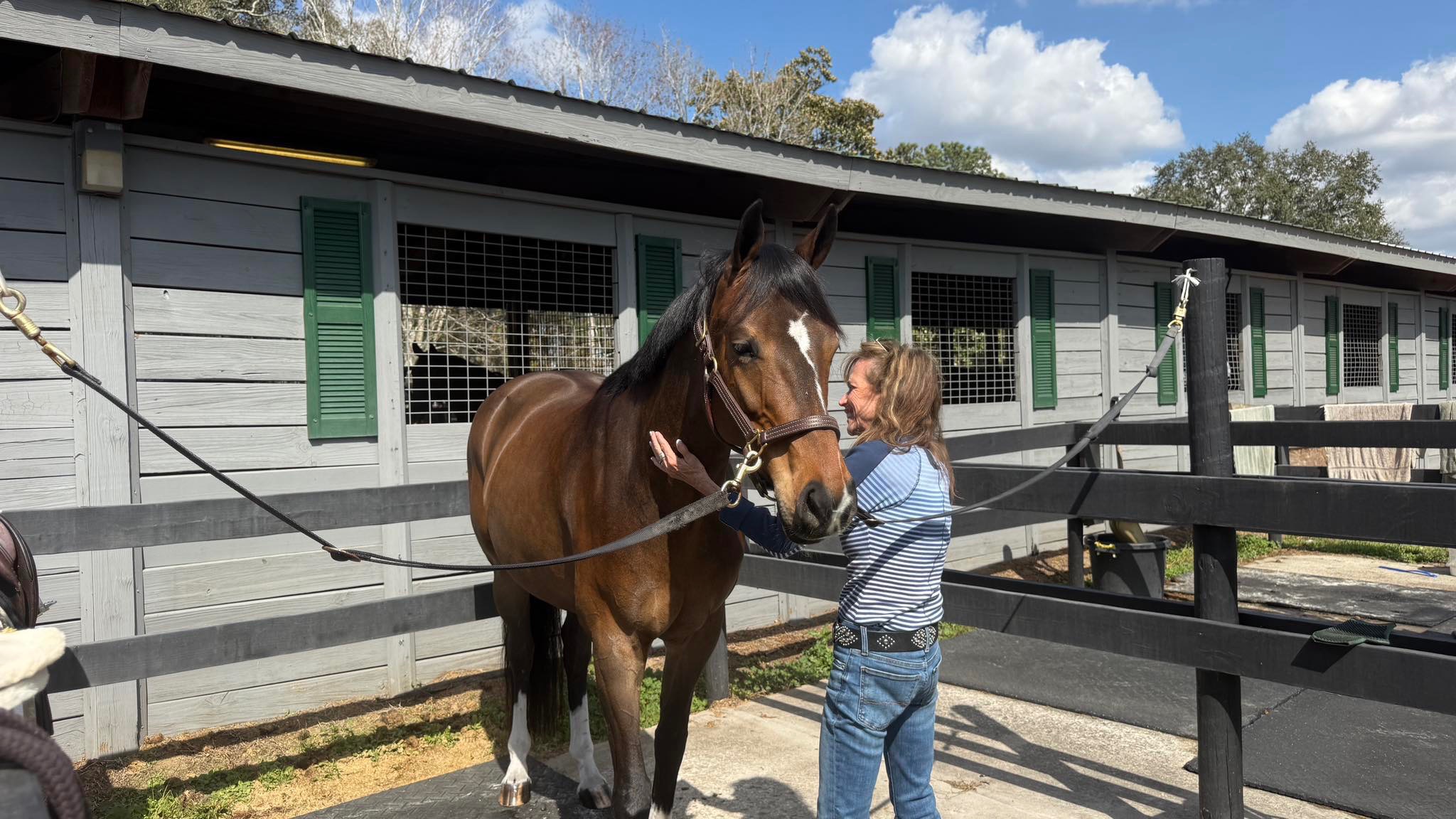
We frequently hear concerns about bribing horses or creating pushy behavior with food. However, it isn't the food that creates mouthy horses; it is poor timing. Just as poorly timed pressure leads to bad behavior, a lack of clarity in any kind of training leads to frustration and fear.
It is interesting that some feel uncomfortable carrying treats but have no issue carrying whips or wearing spurs. Since horses will be motivated one way or another, it makes sense to choose the path that engages their thinking brains rather than making them masters of escape and avoidance.
Modern neuroscience offers us so much information, yet many still cling to the methods of previous generations. When we add something they love to the training equation, the results are astounding. Horses become invested, raise their own criteria, and their eyes truly come alive. They begin to look for us and whinny when they see us.
Once they understand the game, the connection becomes about the interaction itself rather than just the food. If horses become pushy or obsessed with the food, the technique is being applied incorrectly.
Research into contrafreeloading has shown that many animals, including rats and various other species, actually prefer to work for their food rather than take it for free. This drive to participate is a powerful tool when harnessed correctly.
To many, boundaries mean corrections. We prefer to reframe boundaries as a way to redirect unwanted behavior. For horses who paw in the crossties, reprimanding them rarely works long-term. Instead, we reinforce them for standing quietly. For horses who rear, we reinforce them for keeping their feet on the ground and walking calmly toward a target. When punishment/pressure are absent there is nothing to fight against.
The good news is the most dangerous behaviors or horses labeled as lost causes can find a way through. It requires a thoughtful rewiring of neural pathways by someone committed to hearing what the horses are saying.
Behaviors that look like anger are often just fear that has turned proactive. Beneath horses that appear aggressive are often lost souls crying out to be heard and treated with calm, empathetic, and consistent clarity. When we hear them, we all win.