Blogs
Training advice, inspirations, and motivations all found here.
#23: The Emotional Bank Account - Why 'Small' Lessons Pay Huge Dividends
We often teach horses behaviors that seem insignificant on the surface, but these tools can actually be vital for building emotional resilience and confidence.
For a horse, being successful at his job is incredibly rewarding. In fact, behavioral science shows that horses often prefer to work/play for a reward rather than simply receiving it for free, a concept known as contrafreeloading. Solving a puzzle and finding the right answer makes them feel capable and smart.
It is helpful to remember that from a horse’s perspective, everything we ask is essentially a trick. Loading into a trailer is a trick, jumping an oxer is a trick, and performing a piaffe is a trick.
These actions don’t have inherent meaning to a horse, yet we often attach intense importance to them, sometimes to the detriment of their well-being. By focusing on small, low-pressure tasks, we can build a massive amount of credit in his emotional bank account for when things get difficult.
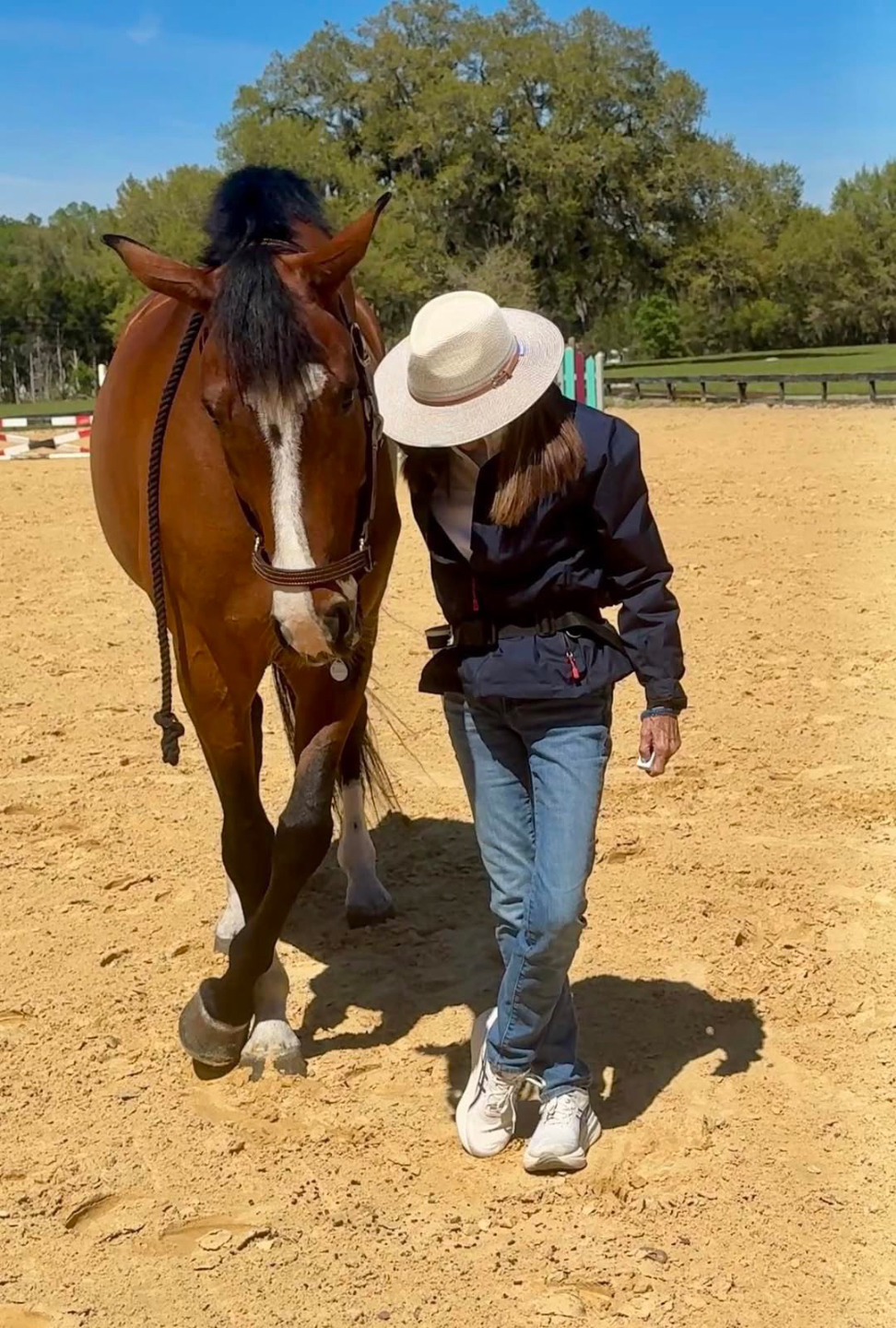
Horses doing R+ can be excellent at generalizing. We actually think they can often be better at this than people because they don’t have the highly developed prefrontal cortex that we do. That is… overthinking doesn’t get in their way. They are good at taking one piece of information and plugging it into another context.
Here is an example. Let’s say your horse spooks on trail rides so badly you don’t even want to go anymore. The trigger is dark objects off in the distance.
You decide to gather some dark objects at home and place them around your arena and barns. When he bravely investigates these objects, you praise him, click, and reinforce.
The next trail ride, you have some mild spookiness, but it has improved tremendously. This is generalizing. He has taken the small lesson learned in the quiet home arena (where it was easy for him to settle and think clearly) to the more highly adrenalized trail ride.
This is the start of rewiring old neural pathways for resilience, self-regulation, and improving confidence. Try not to discount the small lessons. The little things pay huge dividends when used systematically and creatively in your training.